Schnell Group Spa
Various equipment
Various equipment


Optimising Wall Production in Residential Precasting: What Really Works
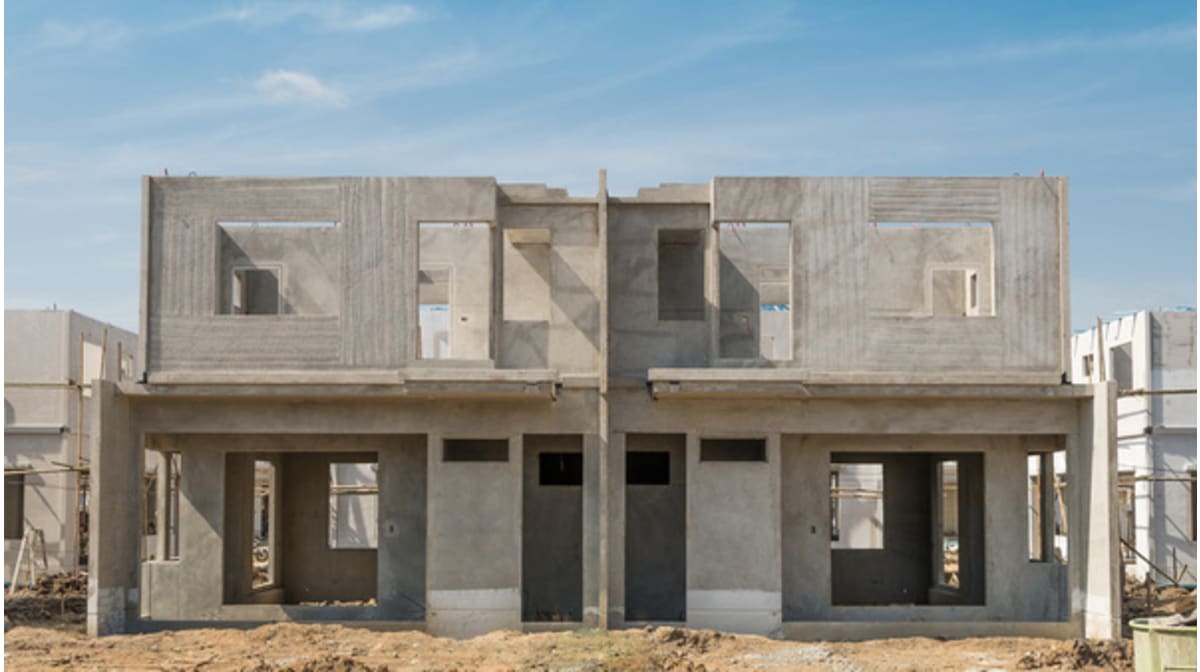
In residential precast construction, the wall is the central element around which the entire building system is organized. It must be designed to accommodate installations, openings, insulation, and lifting or handling systems. For this reason, the electro-welded mesh becomes one of the most critical and delicate components in the entire production process.
The Challenge of Custom Reinforcement Mesh
Many residential prefabricators frequently need to use engineered mesh. This specialised mesh is employed because it can adapt to the unique requirements of different projects, particularly in the production of single walls, double walls, and walls with customised door and window openings.

Faced with this requirement, the manufacturer has two options:
- Purchase the engineered mesh from an external supplier, incurring high costs, inflexible delivery schedules, and limited opportunities for in-process modifications.
- Adapt standard mesh in-house, using manual cuts, welds, and bends, an approach that leads to significant waste of both raw materials and labour resources.
This second option presents several critical issues:
- Increased material waste
- The need for specialised labour for rework, handling, and assembly
- Discontinuous production that is difficult to integrate into an automated line
- Low process traceability and repeatability

These challenges are further compounded in the production of double panels, where trusses, inserts, and spacers must be integrated into a workflow that, without automation, demands long lead times and high manual precision.
A New Vision for Industrial Production
There is an increasing need to integrate special mesh production into the factory’s automated workflow.
The goal is not only to reduce waste and save time, but also to enhance the quality of the finished product, ensure full process traceability, and provide the flexibility required to meet evolving project demands quickly.
Flexiweld: The Integrated Solution for Engineered Mesh
Flexiweld is a plant developed by AWM – Schnell Group for the automated production of both standard and special electro-welded mesh. It has been engineered to provide maximum operational flexibility and a high level of integration within prefabrication processes.

It features a comprehensive range of functions designed to automate the entire production cycle:
- - Production of standard or engineered mesh according to order specifications
- - Variable pitch welding with automatic wire positioning
- - Processing of wires with diameters ranging from Ø5 to Ø12 mm, including options for special configurations
- - Automatic bending of the entire mesh panel via integration with the Autobend system
- - Possibility to shape single wires to match the geometry of the wall.

Key Benefits for Precasters
The introduction of a system like Flexiweld overcomes one of the main barriers to full automation in the precast industry: the production of customised mesh.
With Flexiweld, special mesh is no longer an isolated, manual process prone to inefficiencies; it becomes an integrated part of the production flow, bringing a wide range of benefits:
- - Reduced waste and optimised material usage
- - Elimination of manual reworking
- - Higher mesh quality and precision
- - Lower reliance on manual labour
- - Increased overall plant productivity
- - Enhanced production traceability and repeatability
All of this results in a lower economic impact of reinforcement on the total cost of the panel.

More Integration, More Efficiency
The evolution of residential precasting inevitably depends on the ability to automate and integrate every stage of the process, including those that, until recently, seemed too complex to standardise.
Flexiweld is a concrete answer to this challenge. A flexible and modular technology, adaptable to various production environments, it brings efficiency, quality, and consistent productivity to even the most demanding phase: the production of engineered mesh.
With AWM now part of the Schnell Group, we deliver innovative and fully integrated reinforcement solutions to precasters worldwide.
By collaborating closely with companies and industry experts, we design tailor-made production systems to meet every specific need.
Want to improve your production process? Fill out the form, and our experts will contact you to develop the most suitable solution for your needs.

Alessio Cirulli
Thursday, March 12, 2026